You're not behind. The system is broken.

Rent in NZ has gone up 38% in 5 years. A traditional build now starts at $400k+. Here are 8 reasons everyday Kiwis are skipping the housing market line and getting into something they actually own.
Let's be honest about what renting actually costs.
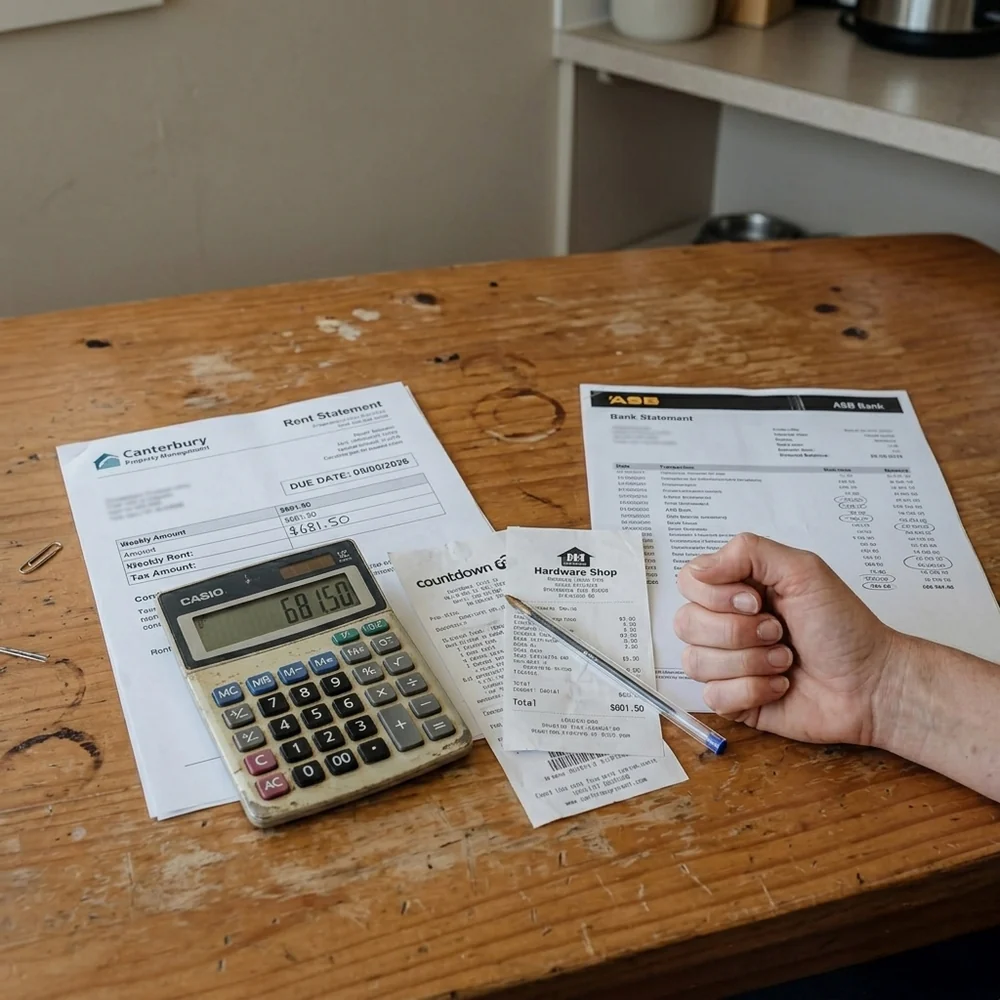
At $650/week, you're handing over $33,800 a year. Over five years, that's $169k — gone. No equity. No asset. No exit.
Meanwhile, the average new build in NZ now starts north of $400k before you've even priced the land, and a builder's 12–18 month timeline assumes everything goes to plan. It rarely does.
So Kiwis have started doing the math differently. Not "how do I save $400k?" — but "how do I stop the bleed and start owning something this year?"
Here's what the full sum looks like.
1.The rent maths is real — and it only proves half the point
Rent isn't just expensive — it's compounding against you. Every year you stay in, the deposit you're saving for slips further away because house prices and rent are both climbing.
A compact home flips the maths in the other direction: instead of paying someone else's mortgage indefinitely, you can start paying down your own asset in years rather than decades.
2.A traditional build is locked behind $400k+
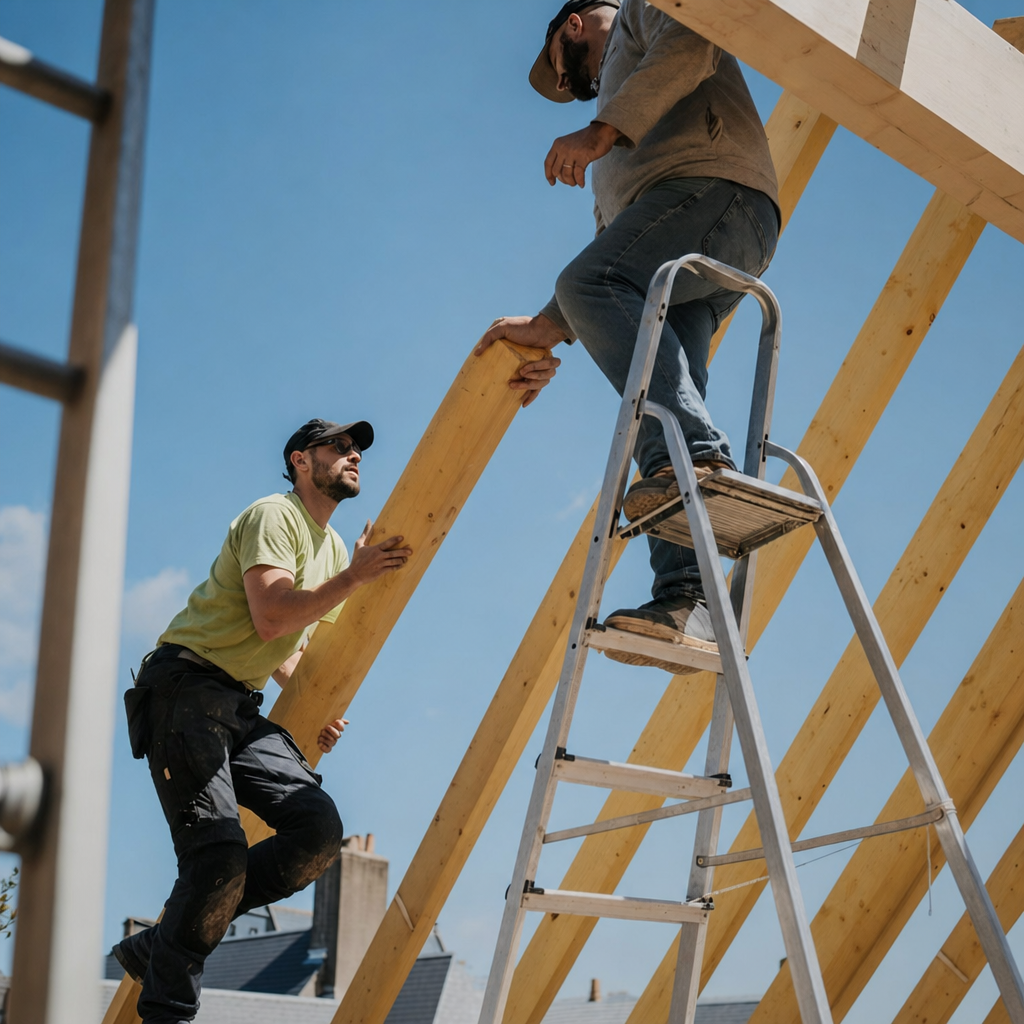
Group home builders advertise "from $349k" but few packages leave the door under $500k once you add land prep, driveways, fencing, council fees and the near-inevitable variations.
A compact prefab gets you a full, kitted-out unit for a meaningful fraction of that — without the 18-month wait and without contract surprises appearing at month 14. That doesn't make it the right choice for every buyer, but it does put a real option on the table that used to be a hypothetical.
3.Land + tiny home = something you actually own
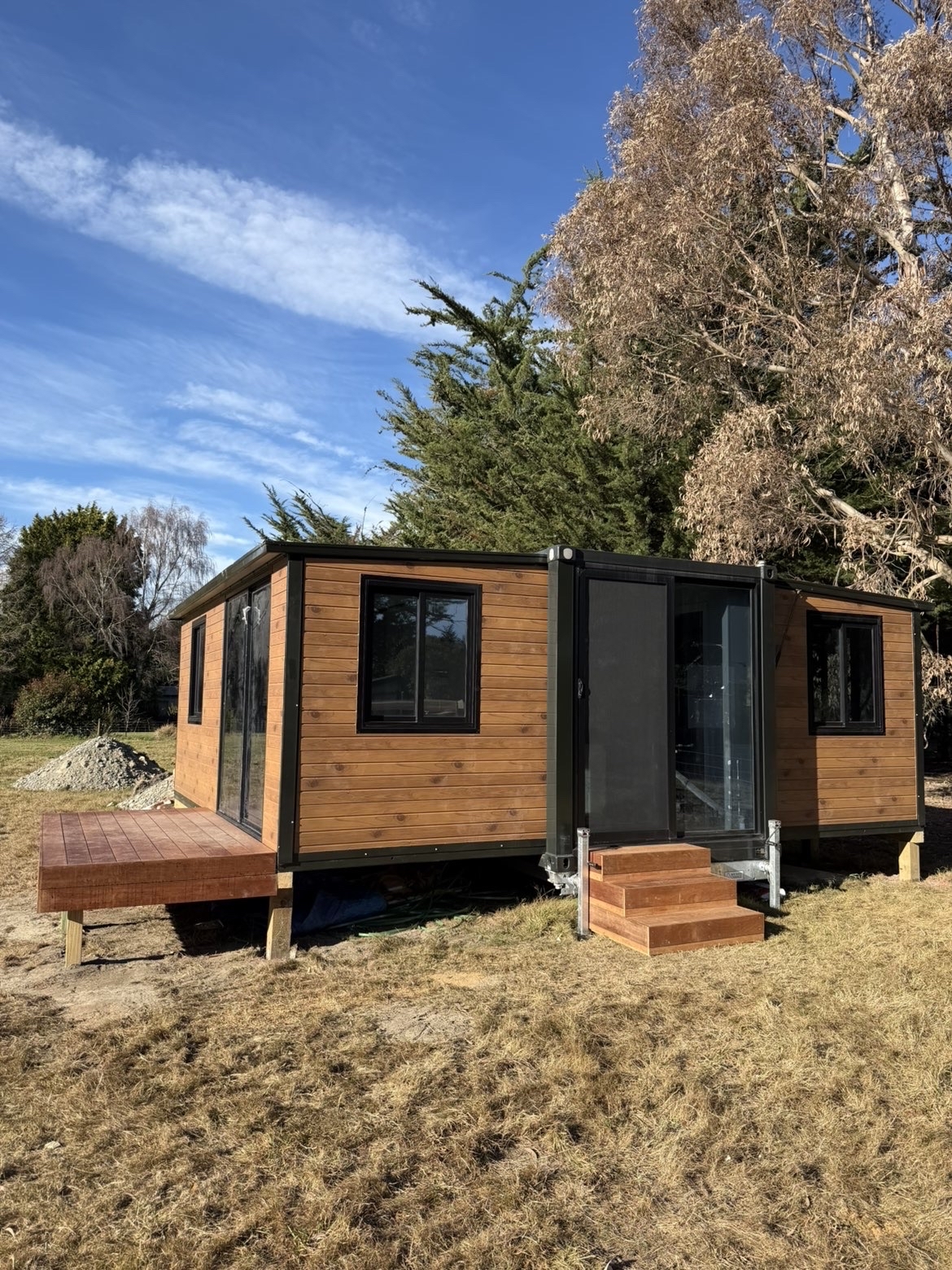
This is the move most renters don't realise is on the table. A bare section in a smaller town can be picked up for $80k-150k. Drop a tiny home on it, and you've got a place to live, an asset to your name, and an exit from the rent cycle — all for less than what some Aucklanders pay for a one-bedroom apartment deposit.
4.Park it on family land (the granny-flat approach)
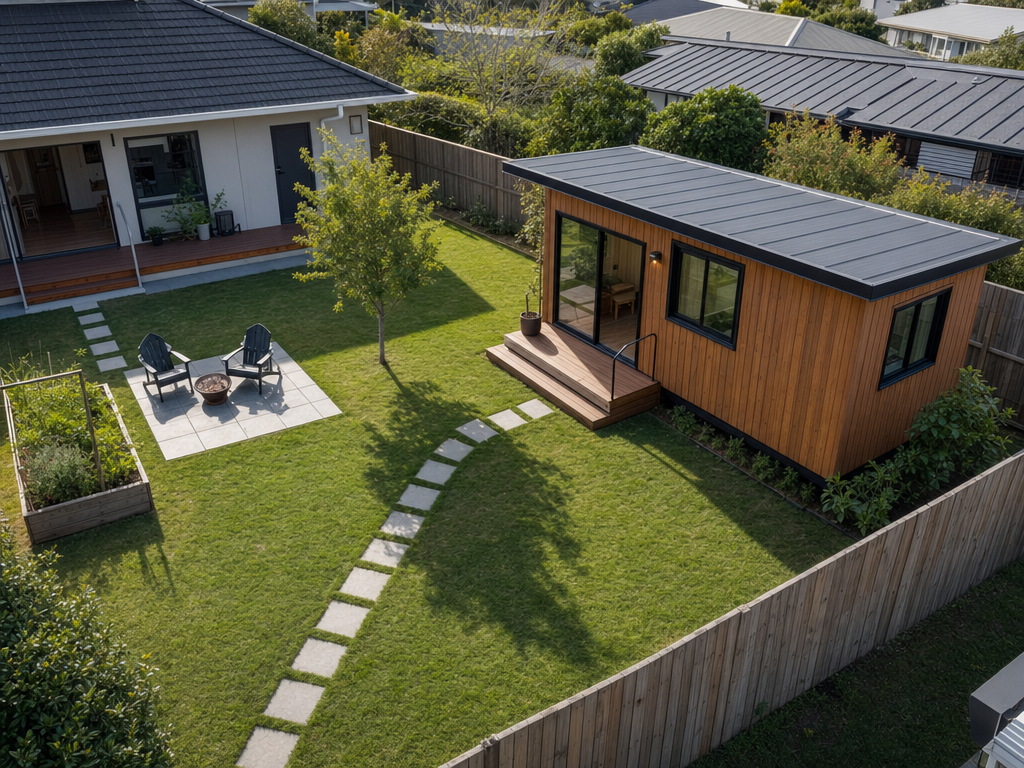
If parents, in-laws or a sibling have land with room to spare, the maths change again. Plenty of buyers skip the land purchase entirely by setting up on family property — paying mates' rates instead of market rent, saving the deposit they couldn't save before, and keeping their own front door.
5.It arrives in months, not years
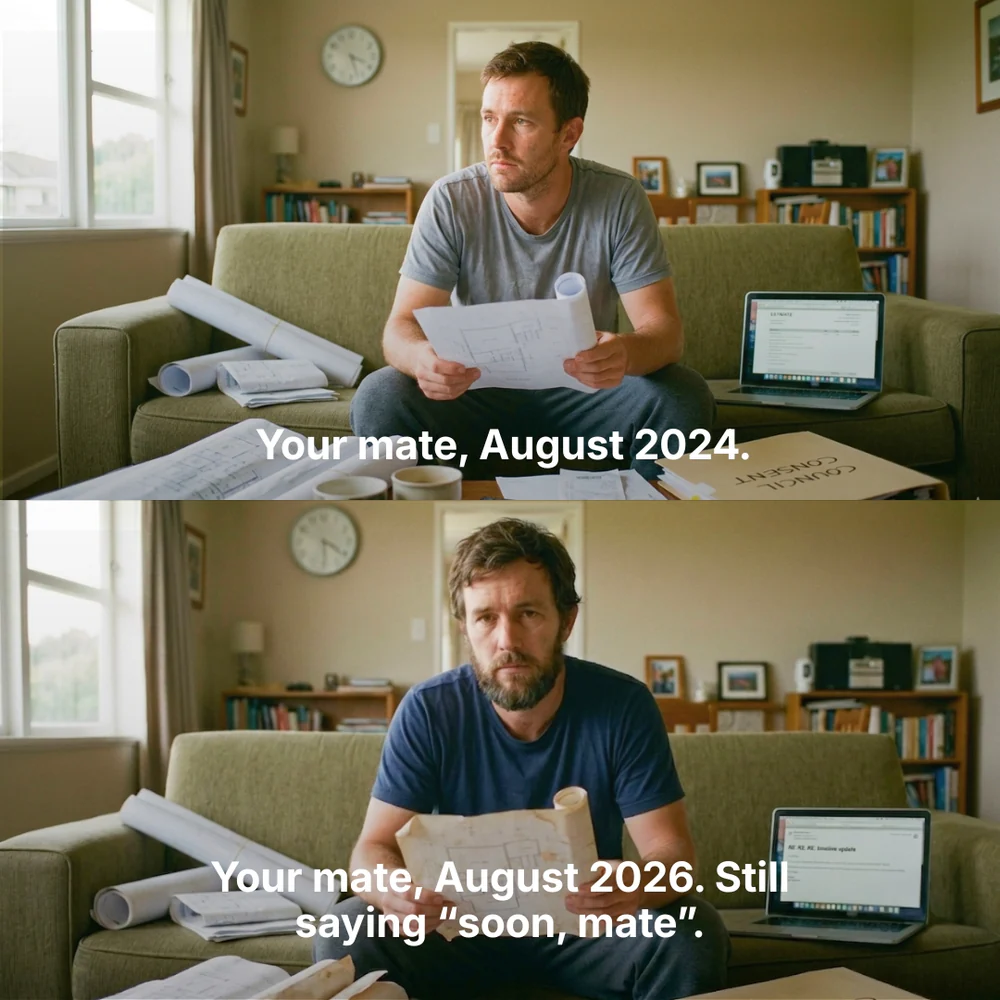
The friend who's "building soon" has been saying it for two years. With a prefab tiny home, the unit is already manufactured — the honest timeline is typically a few months from order to delivery, not the full architect → consent → builder → variation cycle. Speed is the part traditional builders can't compete with, and it's the part that actually changes your life.
Goes to someone else
Goes into something you own
6.Same money, very different outcome
Goes to someone else
Goes into something you own
Average Auckland rent is ~$680/week. Over 18 months, that's $53k gone... to your landlord, with nothing to show. A tiny home unit costs roughly the same to own outright. Same money, completely different outcome. One leaves you with nothing. The other leaves you with a home.
7.You can take it with you
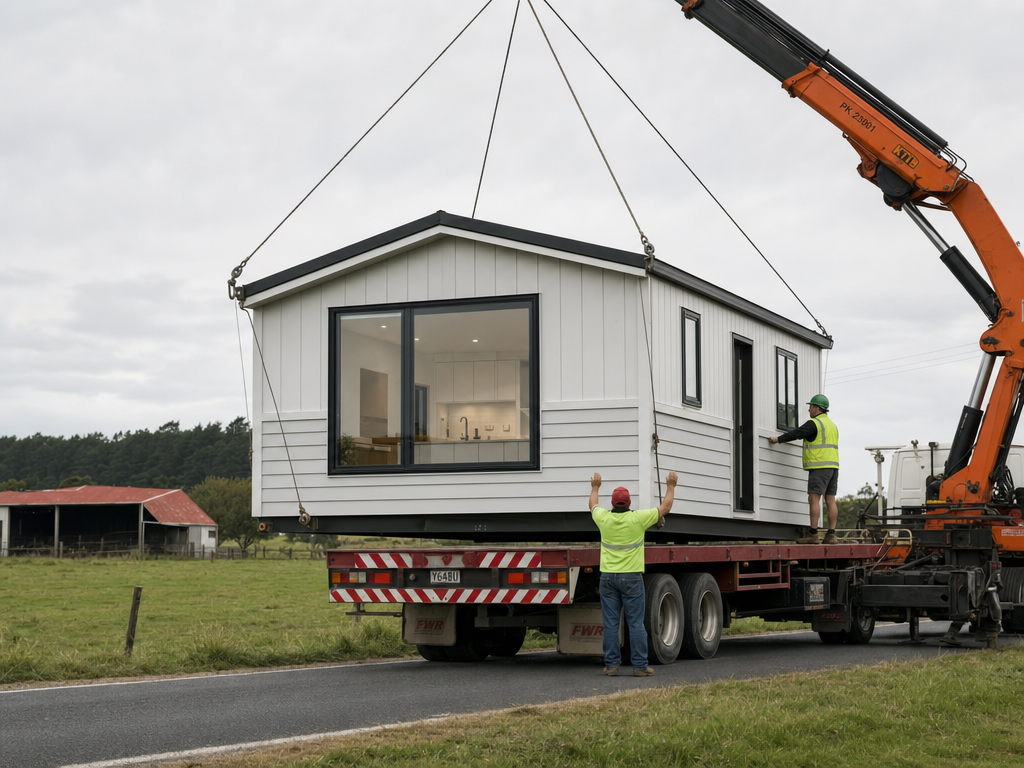
Renting on someone else's land while you save for your own? Work moves to Tauranga? Want to shift the unit to a new section in five years?
Portable by design means the asset can move with the next chapter of a life, rather than pinning it in place. That flexibility is worth stating out loud — it's one of the few things a foundation-slab build genuinely can't offer.
8.Plenty of Kiwis have done this — and more will
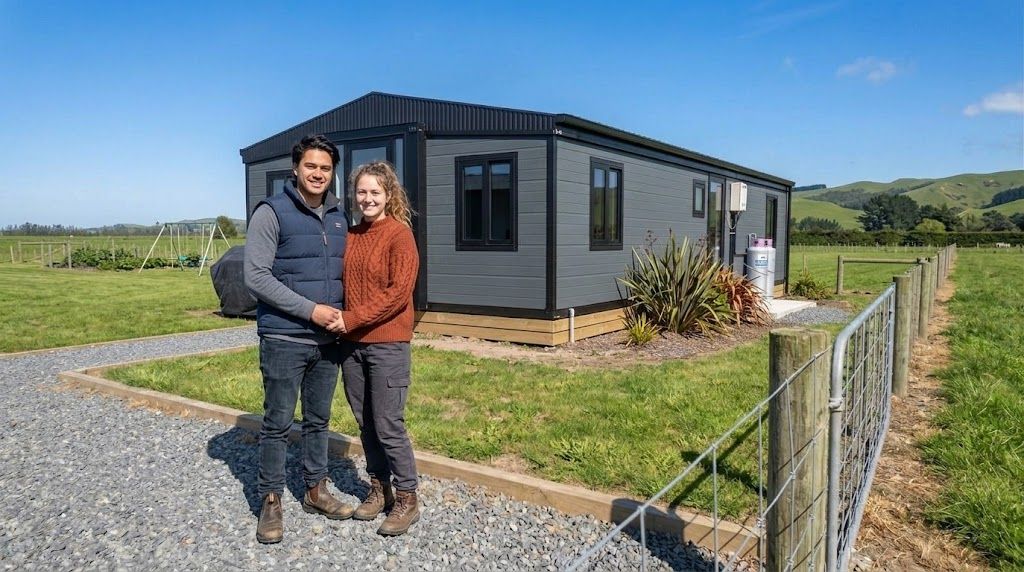
People saving deposits on family land, couples buying their first section, parents setting up adult kids, retirees downsizing without a full-build ordeal. The path out of renting isn't theoretical anymore.
At Tiny Home Weekly we've been covering it every week — and the queue of Kiwis working through this maths is genuinely growing.
Three ways Kiwis are approaching this
The deposit saver
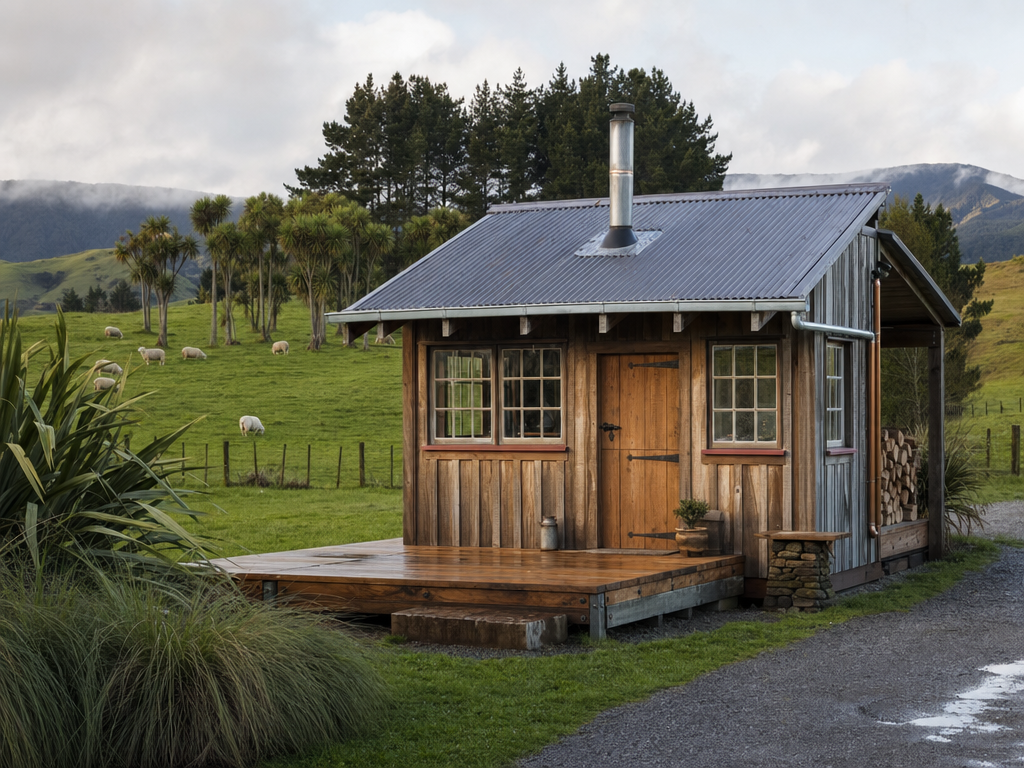
Living on family land for $150/week instead of $650. The $500 difference goes straight into a deposit fund every week. Two years of this and there's a real house deposit on the table. It's the fastest route we've seen work consistently.
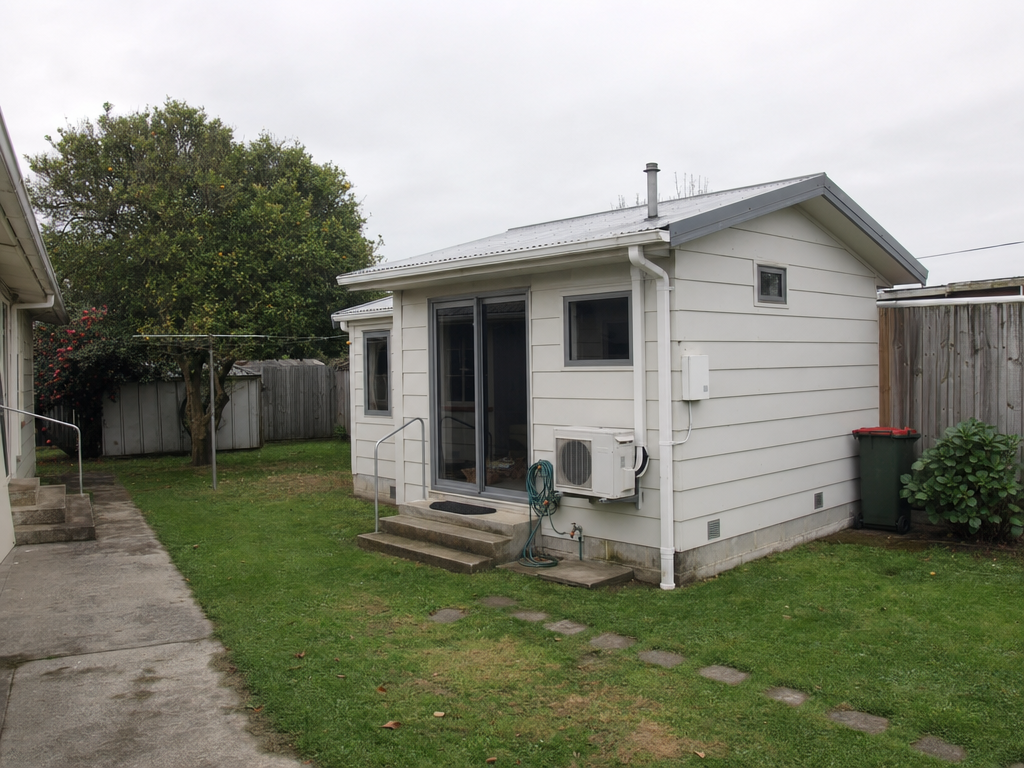
The family land move
Parents have a quarter-acre with half of it doing nothing. You've been paying $680/week to live 45 minutes away. Put a compact home at the back of their section, pay them something fair, and stop the bleed.
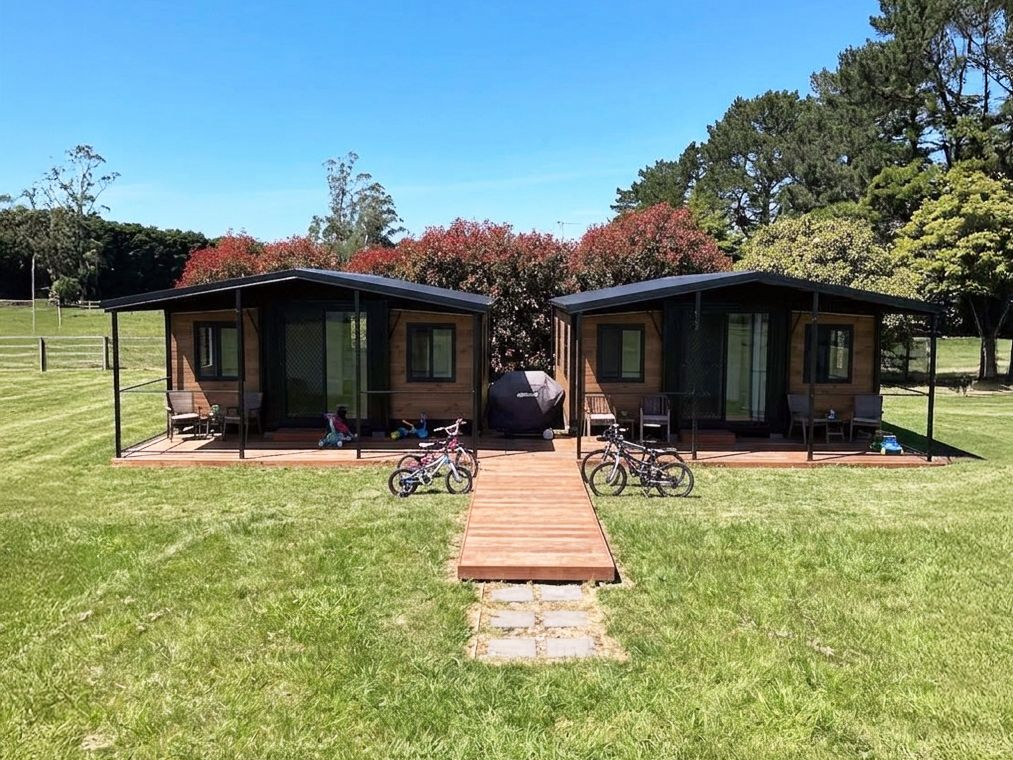
The friend co-buy
Two people with $80k each have $160k between them — enough for a section in a smaller town plus two units. Two front doors, two separate lives, neither of you doing it alone. More people are working this out than you'd expect.
To be clear… this isn't magic.
A compact home isn't a magic wand. You'll still need a site, power and water sorted, and a clear-eyed conversation about what you're trying to achieve.
We won't tell you it's the right move for everyone — some people genuinely should build traditional, and we'll say so. But if you're paying $33k a year in rent with no end in sight, this is the most honest alternative we know of.