The Bathroom Question: Composting Toilets and Greywater, Plainly Explained
It's the question everyone asks and nobody wants to ask first. Here's how these systems actually work day to day — the good, the honest and the smelly.
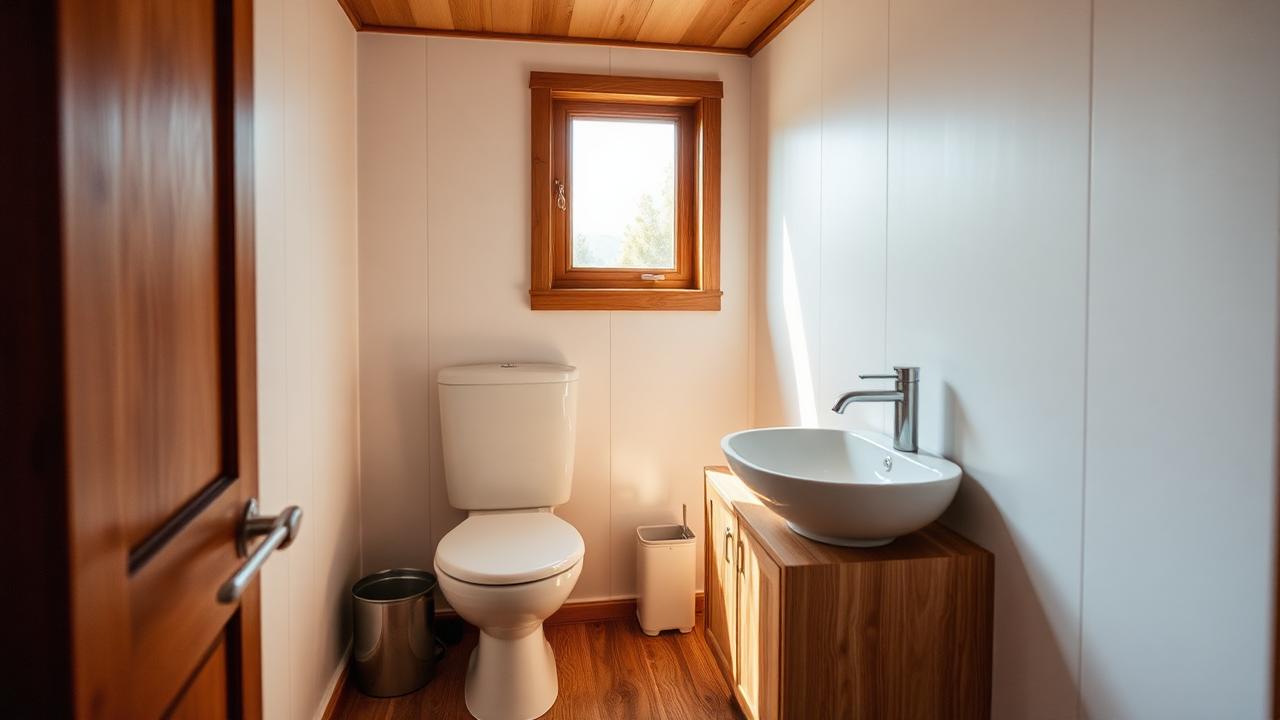
Every conversation about off-grid tiny living eventually arrives at the toilet, usually after a pause. It's worth answering directly, because the reality is less confronting than most people expect and the failure modes are entirely avoidable.
This guide covers how the common systems work and what living with them is like. It doesn't cover the rules — that's a separate conversation, and one to have with a professional about your particular site.
Composting toilets: how they actually work
The principle is separation. Most modern units keep liquid and solid waste apart, because it's the combination of the two that produces the smell people are imagining. Urine is diverted to a container or a soak arrangement; solids drop into a chamber with a carbon medium — coconut coir, sawdust, peat — where they break down.
Two things make the difference between a system that's pleasant and one that isn't: airflow and carbon. A properly installed unit has a vent and usually a small extraction fan pulling air out of the chamber continuously, which means the bathroom air moves toward the toilet rather than away from it. Add enough carbon material after use, and a well-run composting toilet genuinely doesn't smell.
The honest part: it is not a fit-and-forget appliance. The liquid container needs emptying regularly — more often than people expect, and it's the job that catches new owners out. The solids chamber needs emptying periodically, and the material needs somewhere appropriate to go. There's a fan drawing a small amount of power continuously, which belongs in your off-grid energy calculation.
A well-run composting toilet doesn't smell. A neglected one absolutely does. The variable is maintenance, not technology.
Greywater: the water you forget about
Greywater is everything from the shower, basin, kitchen sink and washing machine — which, in a small home without a flush toilet, is nearly all the wastewater produced.
It's less hazardous than blackwater but it isn't harmless. It carries food particles, fats, hair, skin and whatever's in your cleaning products, and left standing it turns unpleasant quickly. The general approach is to filter out solids and disperse the water below the surface into soil, where the soil biology does the work, rather than letting it pool.
Two practical points make greywater systems behave. First, what you put down the drain determines what comes out: biodegradable, low-sodium, low-phosphate cleaning products make a real difference to whether the receiving soil and plants stay healthy. Second, a grease trap on the kitchen line is worth having, because kitchen fat is what blocks these systems.
Living with it
The adjustment takes about a fortnight, after which the habits are automatic: carbon after use, keep an eye on the liquid container, don't tip cooking oil down the sink, use the right cleaning products.
The systems that go wrong are the cheapest units, the ones installed without proper venting, and the ones whose maintenance schedule was treated as optional.
Getting advice that fits your site
Soil type, slope, rainfall and how many people live in the home all change what's appropriate, and this is an area where a properly designed system is worth paying for. Get someone qualified to look at your actual site rather than adapting a solution that worked for someone else's.

Hana Mitchell
Hana has covered housing and small-space design in Aotearoa for over a decade. She founded Tiny Home Weekly to bring proper journalism to a sector Kiwis are increasingly excited about.
Also worth reading
From a Shed to My Own Front Door: One Canterbury Woman's Story
She lost the house, the marriage and her security in a single text message. Six months later she owns her home outright — for $24,500.
Spring 2026: small-home builds hit a record as the 70m² rule beds in
Nine months after the consent exemption took effect, councils are reporting their busiest spring on record for small stand-alone dwellings — and prefab suppliers are scaling up to meet demand.
What owners actually paid to heat a small home this winter
We asked small-home owners across the country for their real winter power bills. The results show how far good insulation and a right-sized heat pump go.

Thinking about a tiny home?
Get our free guide to compare your options — before you spend thousands.
- Expert tips from industry insiders
- Real delivery timelines
- 5 warning signs of a bad prefab seller