Catching What Falls: Rainwater Systems for Small Homes
A small roof collects less water than a big one, which makes tank sizing a real calculation rather than a guess. The good news is that small households use remarkably little.
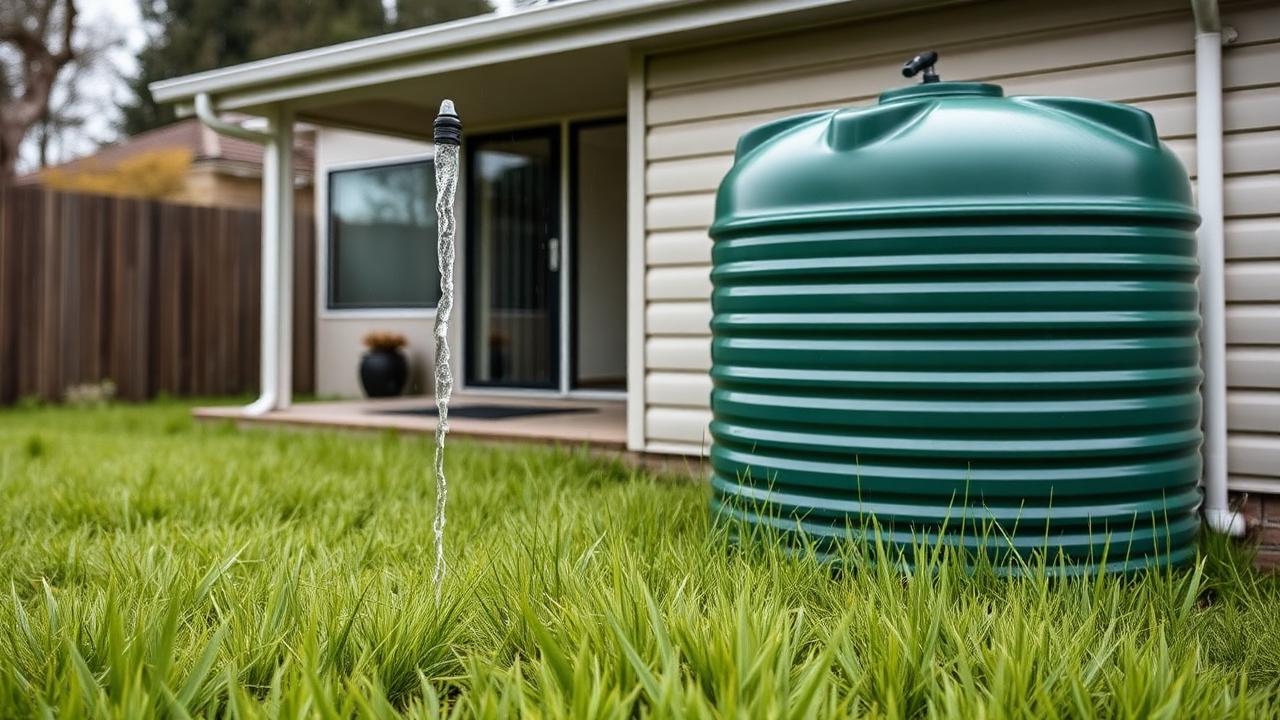
For anyone siting a home where there's no mains water, rainwater is the obvious answer, and in most of New Zealand it's a reliable one. It's also the system where "she'll be right" causes the most inconvenience, because running out of water is not a problem you can defer.
The sizing calculation, roughly
Two numbers drive everything: how much water lands on your roof, and how much you use.
Collection depends on your roof area and your local rainfall. A tiny home has a small roof, which is the obvious catch — a 35-square-metre footprint collects a fraction of what a large house does from the same downpour. Where your rainfall is high and reasonably even through the year, that's usually fine. Where you have a pronounced dry season, it's the constraint that decides your tank size.
Consumption is where small households have an advantage. A careful one- or two-person household in a small home uses far less than an average family house, particularly with low-flow fixtures and a compact hot-water system. [VERIFY]
The design question is not average supply versus average demand — it's whether your tank holds enough to carry you through your longest typical dry spell. Size for the gap, not the average.
Getting clean water out of it
A roof collects more than rain. Leaves, dust, bird droppings and whatever the local birdlife has been eating all arrive with it, so the system needs to deal with that before the water reaches a tap.
The standard arrangement works in stages: gutter guards keep the coarse material out, a first-flush diverter discards the initial dirty run at the start of a downpour, and a leaf and debris trap catches the rest before the tank. Inside, sediment filtration and then treatment — commonly a carbon filter with UV sterilisation — handle what's left for drinking water.
None of it is exotic, but all of it needs maintaining. Filters have service intervals, UV lamps have a working life, and a first-flush diverter that's blocked is just a decoration.
A tank that's full of water you can't drink is a tank that's empty. Treatment isn't the optional part of the system.
Tanks, pumps and practicalities
Tank material and placement matter more on a small site than people expect. Above-ground poly tanks are the common, affordable choice; concrete and bladder tanks suit particular sites. Whatever you choose, it needs a properly prepared base — a full tank is extremely heavy and an uneven base is a slow-motion failure.
You'll need a pump to get useful pressure, which means power, which means the pump belongs in your off-grid energy calculation if you're not on the grid. Think about where the tank goes relative to the home too: it's a large object, and on a compact site it shapes the layout.
Habits that stretch a small supply
Owners of small rainwater systems get good at this quickly. Low-flow showerheads and aerated taps make a real difference. A front-loading washing machine uses substantially less than a top-loader. Fixing a dripping tap becomes urgent rather than eventual. And knowing your tank level — a gauge is a modest cost — turns a nasty surprise into a manageable adjustment.

Hana Mitchell
Hana has covered housing and small-space design in Aotearoa for over a decade. She founded Tiny Home Weekly to bring proper journalism to a sector Kiwis are increasingly excited about.
Also worth reading
From a Shed to My Own Front Door: One Canterbury Woman's Story
She lost the house, the marriage and her security in a single text message. Six months later she owns her home outright — for $24,500.
Spring 2026: small-home builds hit a record as the 70m² rule beds in
Nine months after the consent exemption took effect, councils are reporting their busiest spring on record for small stand-alone dwellings — and prefab suppliers are scaling up to meet demand.
What owners actually paid to heat a small home this winter
We asked small-home owners across the country for their real winter power bills. The results show how far good insulation and a right-sized heat pump go.

Thinking about a tiny home?
Get our free guide to compare your options — before you spend thousands.
- Expert tips from industry insiders
- Real delivery timelines
- 5 warning signs of a bad prefab seller