Living Small, Together: Inside New Zealand's Tiny-Home Communities
Clusters of small homes sharing land, services and a vegetable garden solve tiny living's hardest problem. They also introduce a new one: you now have neighbours with opinions.
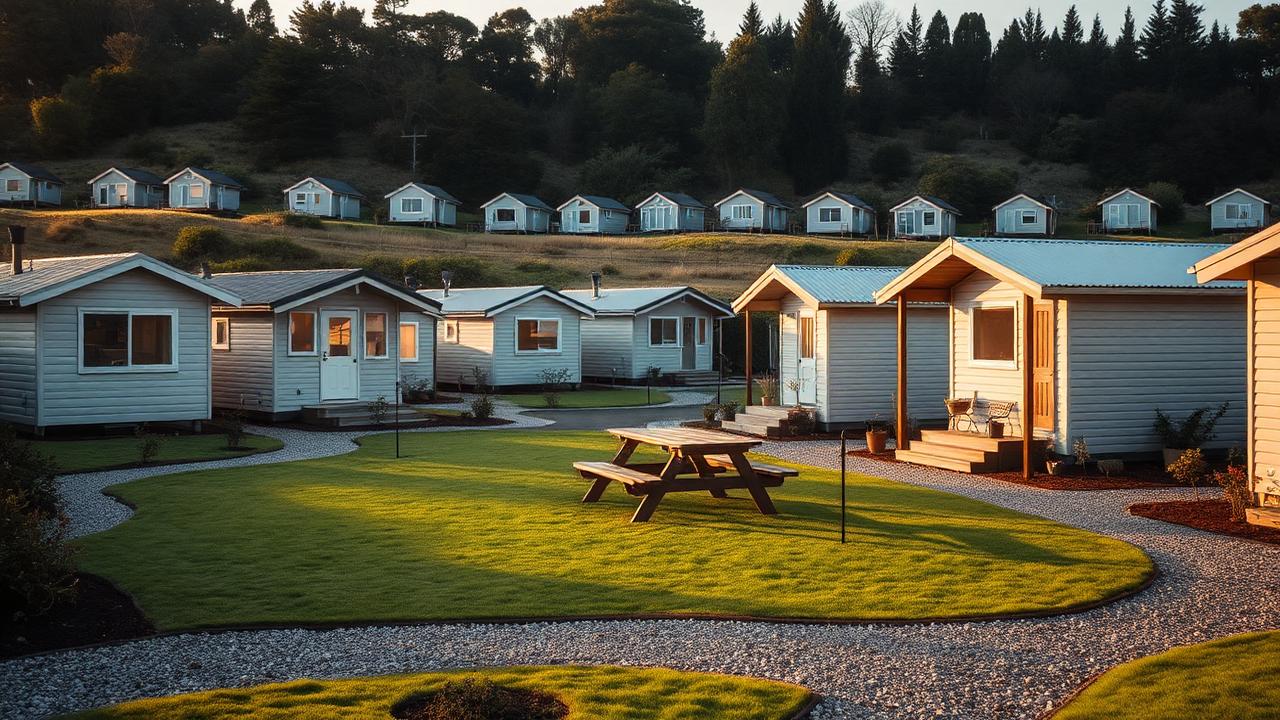
For most people considering a tiny home, the house is the easy part. The hard part is the ground underneath it.
That single problem — where do you put it — is what has driven the growth of tiny-home clusters and villages around New Zealand. Several homes share a site, and with it the driveway, the water supply, the wastewater system and often a good deal more. It's the most elegant answer anyone has found to the land question, and it comes with genuine complications.
What sharing actually buys you
The economics are the first attraction. Site works, a driveway, a water supply and a wastewater system are expensive to build for one home and considerably cheaper per household across six. The same is true of shared infrastructure people rarely think about: a decent workshop, a laundry, guest accommodation, a communal woodshed.
The second attraction is less quantifiable and, for many residents, more important. Tiny living can be isolating, particularly for people who have arrived at it after a separation, a bereavement or a hard financial stretch. A cluster of homes where someone notices if your curtains stay closed is a different experience from a cabin alone at the back of a paddock.
Then there's the practical stuff that makes small homes easier: shared tools, shared vehicles, someone to mind the cat, a garden that's viable because six households tend it rather than one.
The land problem is what drives people into communities. It's rarely what keeps them there.
The arrangements, and why the detail matters
This is where prospective residents should slow down. Communities are structured in several ways — a landowner leasing sites to home owners, a group jointly buying land through a company or trust, a licence-to-occupy arrangement, or something more informal between friends.
The structure determines everything that matters if things go wrong. How secure is your right to stay? What happens if the landowner sells, dies, or changes their mind? What if you want to leave — can you sell your home in place, or must you move it? Who decides on shared spending, and how are disagreements resolved? What happens if a resident stops contributing?
Informal arrangements between friends work beautifully right up until they don't, and the failure mode is expensive. Anyone entering a community arrangement should have the documents reviewed by a lawyer who understands land arrangements. That is not a pessimistic step; it's what makes the optimistic version durable.
The social work is the real work
The durable arrangements are built on unglamorous groundwork done early: written expectations about noise, pets, guests, parking and shared maintenance, and an agreed process for making decisions and handling conflict. It feels excessive at the start, when everyone likes each other. It's what everyone relies on in year three.
The ones that struggle usually skipped it — not because anyone was unreasonable, but because nobody wanted to be the person raising awkward questions during the fun part.
Get the structure right and shared land is the most practical answer to tiny living's biggest obstacle. Get it wrong and you've added neighbours to your problems.

Hana Mitchell
Hana has covered housing and small-space design in Aotearoa for over a decade. She founded Tiny Home Weekly to bring proper journalism to a sector Kiwis are increasingly excited about.
Also worth reading
From a Shed to My Own Front Door: One Canterbury Woman's Story
She lost the house, the marriage and her security in a single text message. Six months later she owns her home outright — for $24,500.
Spring 2026: small-home builds hit a record as the 70m² rule beds in
Nine months after the consent exemption took effect, councils are reporting their busiest spring on record for small stand-alone dwellings — and prefab suppliers are scaling up to meet demand.
What owners actually paid to heat a small home this winter
We asked small-home owners across the country for their real winter power bills. The results show how far good insulation and a right-sized heat pump go.

Thinking about a tiny home?
Get our free guide to compare your options — before you spend thousands.
- Expert tips from industry insiders
- Real delivery timelines
- 5 warning signs of a bad prefab seller